
Views: 0 Author: Site Editor Publish Time: 2026-08-24 Origin: Site


Watching a teenager ride away on two wheels represents a timeless milestone of independence. Today, however, parents face a modern dilemma when deciding if this vehicle should have a motor. You must balance the incredible autonomy an Electric Bike offers against the inherent risks of higher speeds and heavier vehicle frames. This is not a simple "yes or no" question. It requires a careful evaluation of your child's maturity, local compliance, and specific hardware choices.
This guide provides a skeptical, decision-focused framework for parents assessing whether to invest in motorized mobility for a minor. We will explore the realities of physical handling, legal classifications, and essential safety features. You will learn exactly how to determine if your child is truly ready to ride.
Safety is conditional: E-bike safety for children relies on matching the vehicle's classification to the child's cognitive and physical maturity.
Class matters: Class 1 e-bikes (pedal-assist only, capped at 20 mph) are generally the only legally and developmentally appropriate option for young teens.
Weight introduces new risks: Electric bikes are 20–40 lbs heavier than traditional bikes, requiring longer braking distances and greater physical strength to maneuver.
Hardware dictates outcomes: Safety-focused purchases prioritize hydraulic disc brakes, proportional sizing, and software-locked speed limiters over maximum range or motor power.
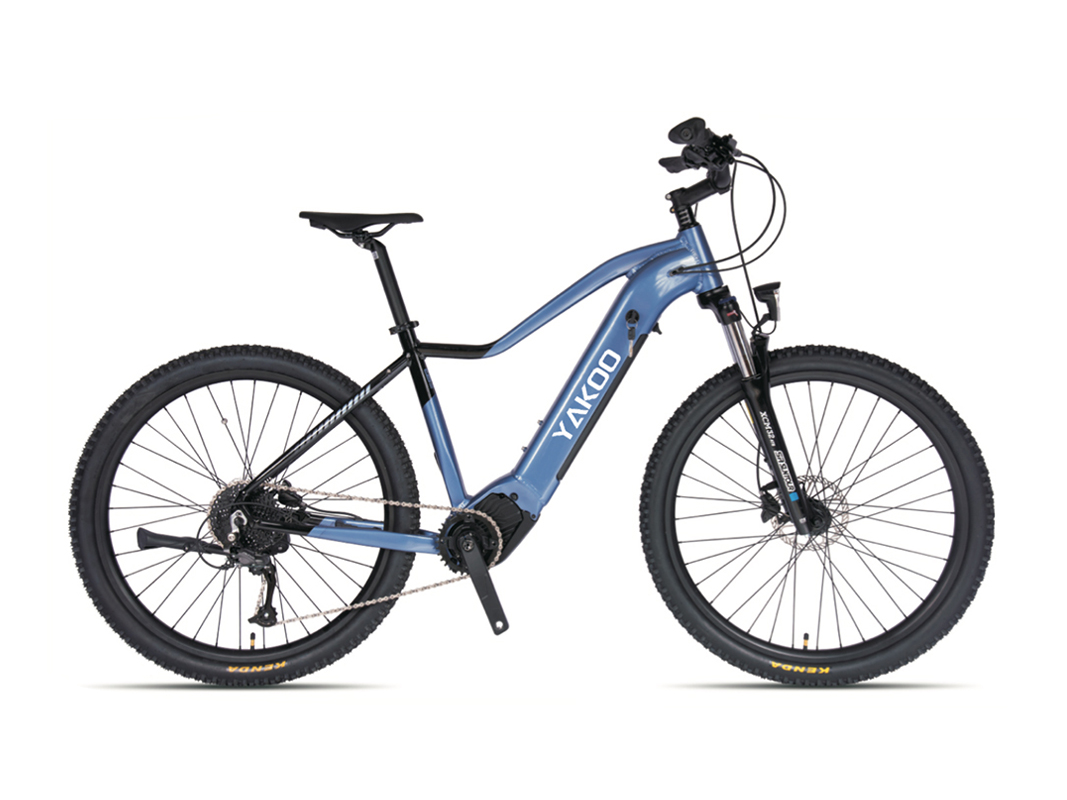
Traditional bicycles usually weigh around 25 pounds. They feel light and nimble. An E-Bike carries large batteries and reinforced frames. They often tip the scales at 55 to 75 pounds. This added mass drastically alters how the machine handles. A young teenager might weigh only 100 pounds. Asking them to maneuver a vehicle half their body weight requires significant physical strength.
Low-speed maneuverability drops sharply. Balancing becomes much harder when rolling to a stop. If the rider loses balance, catching the heavy frame is incredibly difficult. Furthermore, fall severity increases. A heavier bike crashing onto a rider's leg causes more damage than a lightweight aluminum frame.
Physics Comparison Chart: Standard vs. Motorized Bicycles
Metric | Standard Bicycle | Electric Bicycle |
|---|---|---|
Average Weight | 20 - 30 lbs | 50 - 75 lbs |
Average Cruising Speed | 10 - 12 mph | 15 - 20 mph |
Low-Speed Maneuverability | High (easy to catch falls) | Low (requires upper body strength) |
Momentum at Top Speed | Low | High (requires longer stopping distance) |
Momentum equals mass times velocity. Electric variants combine increased mass with sustained higher speeds. Riding at 15 to 20 mph for extended periods changes braking dynamics completely. Riders cannot stop instantly. Stopping distances double or triple compared to traditional pedaling.
We must also address the risk of "throttle shock." This occurs when the pedal-assist surges forward unexpectedly. A rider might lightly push the pedal while turning a tight corner. The motor kicks in. The bike leaps forward. In tight spaces, this sudden acceleration often leads to loss of control. Riders need time to learn how the motor responds to their pedaling cadence.
Motor skills allow a child to balance on two wheels. Executive function allows them to anticipate traffic patterns and react safely. These represent entirely different brain processes. A 12-year-old might possess excellent physical coordination. However, they often lack the cognitive maturity to predict danger at 20 mph.
They might not realize a turning car cannot see them approaching rapidly. They might underestimate how fast an intersection approaches. Evaluating readiness means looking beyond physical coordination. You must assess how well your child makes split-second decisions under pressure.
Industry standards divide motorized bicycles into three distinct classes. You must understand these categories before making any purchasing decisions. Matching the right class to your child mitigates substantial risk.
Class 1 (Pedal-assist up to 20 mph): This serves as the baseline recommendation for minors. The motor only engages when the rider actively pedals. It stops assisting once the speed reaches 20 mph. This forces physical engagement and helps riders pace themselves naturally.
Class 2 (Throttle-assist up to 20 mph): These models feature a throttle. You can ride them without pedaling at all. They mimic mopeds. This removes physical effort from the equation. We consider these higher risk for children. It encourages passive riding at maximum speeds.
Class 3 (Pedal-assist up to 28 mph): These machines hit dangerous speeds very quickly. Keep these strictly for adults or older licensed teens. They are completely inappropriate for young riders due to their extreme speed capabilities.
Local governments view these machines differently than regular bicycles. Many jurisdictions legally restrict operation. They frequently require riders to be 14, 15, or even 16 years of age. Allowing a younger child to ride on public roads may violate state laws.
Furthermore, municipalities routinely ban motorized vehicles from multi-use pedestrian paths. Your local park trail might prohibit them entirely. Always verify municipal trail and path rules before buying. A heavy Electric Bike poses a hazard to pedestrians on narrow paths.
Do not shop based on flashy features or maximum range. Safety-focused purchases require strict adherence to specific hardware criteria. The wrong components turn a fun ride into a dangerous liability.
Hardware Evaluation Parameters for Youth
Component | Recommended Specification | Risk of Ignoring Guideline |
|---|---|---|
Motor Power | 250W – 350W | High torque causes loss of control and unexpected surging. |
Braking System | Hydraulic Disc Brakes | Mechanical brakes lack the power to stop heavy frames quickly. |
Speed Controls | Software-locked limits via app | Inability to govern speed leads to reckless riding. |
Frame Geometry | Step-through design | Rider cannot put feet flat on the ground during emergencies. |
Adult models frequently advertise 750W or even 1000W motors. Avoid these massive motors for young riders. A 750W motor produces torque disproportionate to a child's body weight. This force easily overwhelms a lighter rider during acceleration. We strongly recommend seeking motors in the 250W to 350W range. This provides enough assist to climb hills but prevents aggressive acceleration.
You cannot compromise on braking power. Heavy machines require immense stopping force. Always require hydraulic disc brakes over mechanical ones. Mechanical cable brakes stretch over time. They require strong hand pressure to engage fully. Hydraulic systems use fluid pressure. They offer reliable, low-effort stopping power. A child can pull a hydraulic lever easily and stop the heavy mass safely.
Look for models featuring companion smartphone apps. Modern software allows parents to take control. You can hard-cap the maximum speed through the app. For example, you can lock the motor assistance to stop at 12 mph instead of 20 mph. This feature proves invaluable during the early learning stages. As the rider demonstrates maturity, you can gradually increase the speed limit.
Parents often buy oversized clothing for kids to grow into. Never apply this logic to motorized vehicles. An oversized frame is incredibly dangerous. Prioritize step-through frames. The top tube drops down low. This geometry allows the rider to plant both feet flat on the ground instantly. If they lose their balance, they can step off without getting tangled in the frame.
Motorized power amplifies bad habits. Therefore, a child must demonstrate advanced proficiency on a non-motorized bike first. They must show excellent spatial awareness. They must comprehend traffic rules implicitly. They need to understand right-of-way, hand signals, and shoulder checking. If they struggle with these concepts on a standard pedal bike, they are not ready to upgrade. This "analog first" prerequisite acts as your primary filter.
Never hand over the keys on day one. Introduce the machine slowly. We recommend a strict three-phase rollout plan to build competence gradually.
Phase 1: Empty Lot Practice. Head to an empty parking lot. Turn the motor entirely off. Have the child ride the heavy bike using only their pedal power. They need to feel the bike's raw weight. They must practice braking from various speeds. This builds muscle memory for handling the heavier frame.
Phase 2: Closed Circuit Assisting. Keep the bike in a vehicle-free area. Turn the motor on to its lowest assist setting. Have them ride in large circles and figure eights. They will learn how the pedal-assist surges. They will learn how to modulate their pedaling to maintain a steady speed.
Phase 3: Accompanied Rides. Move to standard routes, like the path to school. Ride alongside them. Observe how they interact with intersections, pedestrians, and obstacles. Do they slow down for blind corners? Do they check over their shoulder? You should only grant independent commuting privileges after they pass this final phase consistently.
Standard bicycle helmets carry CPSC certification. These work perfectly for analog bicycles. However, they are insufficient for motorized speeds. Crashes at 20 mph generate significantly higher impact forces. You must upgrade their head protection. Recommend NTA 8776 rated helmets. Engineers designed this specific certification for higher-impact crashes. These helmets feature thicker foam and drop lower in the back to protect the base of the skull.
Riders must remain visible to drivers at all times. Mandate integrated front and rear lighting. Ensure these lights are hardwired directly into the main battery. Clip-on lights die unexpectedly or get forgotten at home. Hardwired lights guarantee illumination whenever the bike is powered on. Additionally, require high-visibility apparel. Reflective vests or brightly colored jackets drastically improve how quickly a driver spots the rider.
Hardware only protects the rider if they follow safe operational rules. Establish clear, non-negotiable family policies before the first ride.
No Passenger Carrying: This is strictly prohibited for young riders. A passenger adds unpredictable weight. It ruins the bike's center of gravity and handling.
Zero Phone Usage: Riding at 20 mph demands complete visual attention. Looking at a screen for two seconds covers massive ground blindly.
Strict Weather Restrictions: Ban riding in the rain, snow, or ice. Heavy bikes on slick tires slide easily. The hydraulic brakes will lock the wheels, causing immediate skids on wet pavement.
Ultimately, an electric bicycle functions as a lightweight motor vehicle. It is entirely inappropriate to treat it as a traditional toy. The extra weight and sustained speeds fundamentally change how the rider interacts with their environment.
However, when properly managed, they offer excellent mobility. Pairing a strict Class 1 restriction with hydraulic brakes creates a solid foundation. Adding software speed limits and strict parental oversight makes it a safe tool for mature teenagers.
Your next steps require action. Check your local municipal age laws right now. Measure your child for proper stand-over height to avoid buying an oversized frame. Finally, schedule a supervised test ride of a low-powered Class 1 model before making any final commitments.
A: Laws vary heavily by state and municipality. Many states legally restrict riders to 14, 15, or 16 years old, particularly for Class 2 or Class 3 models. Class 1 models sometimes have looser age restrictions. Always check your local Department of Transportation or municipal codes before purchasing.
A: We strongly advise against Class 2 throttle models for youth. Throttles remove the physical engagement necessary for controlled pacing. They mimic mopeds, encouraging passive riding at maximum speeds, which increases accident risks for inexperienced riders.
A: Yes, you likely do. Standard homeowner or renter policies frequently exclude motorized vehicles entirely. If your child causes property damage or injures someone, you may have no liability coverage. Explore dedicated insurance policies designed specifically for these vehicles.
A: Kids can safely ride as passengers only if the adult's vehicle is specifically rated for cargo weight. You must equip it with appropriate mounted child seats, sturdy footpegs, and wheel guards to prevent feet from catching in the spokes.


