
Views: 0 Author: Site Editor Publish Time: 2026-08-11 Origin: Site


Learning to ride a bike marks a major developmental milestone for young children. However, traditional teaching methods have fundamentally shifted in recent years. Parents no longer rely solely on the old standard. When evaluating a first Kids Bike, you face a direct choice. You must decide between two opposing methodologies. You can prioritize pedaling by using training wheels. Alternatively, you can prioritize equilibrium using Balance Bikes. This decision deeply impacts how quickly children gain riding independence.
We will strip away marketing claims to objectively evaluate both approaches. You will see how each method affects pediatric motor development. We will analyze transition friction and real-world implementation. Our goal is to clarify the learning process. Ultimately, we will guide you toward the best choice for your toddler.
Cycling requires two distinct physical skills: propulsion (pedaling) and dynamic equilibrium (balancing).
Balance bikes focus entirely on dynamic equilibrium and core stability, aligning with natural gross motor development timelines.
Training wheels allow for immediate propulsion but create a false center of gravity, frequently resulting in a steeper learning curve when transitioning to independent riding.
The optimal choice depends on the child’s age, baseline coordination, and the primary terrain available for practice.
Riding a bicycle demands simultaneous mastery of two distinct physical skills. You must balance the frame, and you must pedal forward. These actions represent completely separate cognitive tasks. Pedaling requires rhythmic leg movements to generate propulsion. Balancing demands dynamic equilibrium to keep the heavy frame upright. Most traditional teaching models ignore this division. They assume children can naturally combine both actions upon their first attempt.
When toddlers face both requirements simultaneously, they often experience cognitive overload. Introducing both skills concurrently frequently leads to immense frustration. It delays independent riding significantly. Young brains struggle to process leg propulsion and postural equilibrium together. They lack the neurological pathways to synchronize these complex gross motor functions. By separating the two skills, you dramatically simplify the learning curve. You allow the child to master one fundamental challenge before introducing the next.
True bicycle steering requires leaning into a turn. You cannot successfully navigate a two-wheeler by simply twisting the handlebars. A rider must feel the physical feedback of shifting their body weight. This specific mechanic must be learned through physical feedback. It proves completely impossible to learn on a rigid, four-point base. Children must experience slight lateral instability to master this natural motion. Without the ability to lean, they never truly learn how a bicycle operates in space.
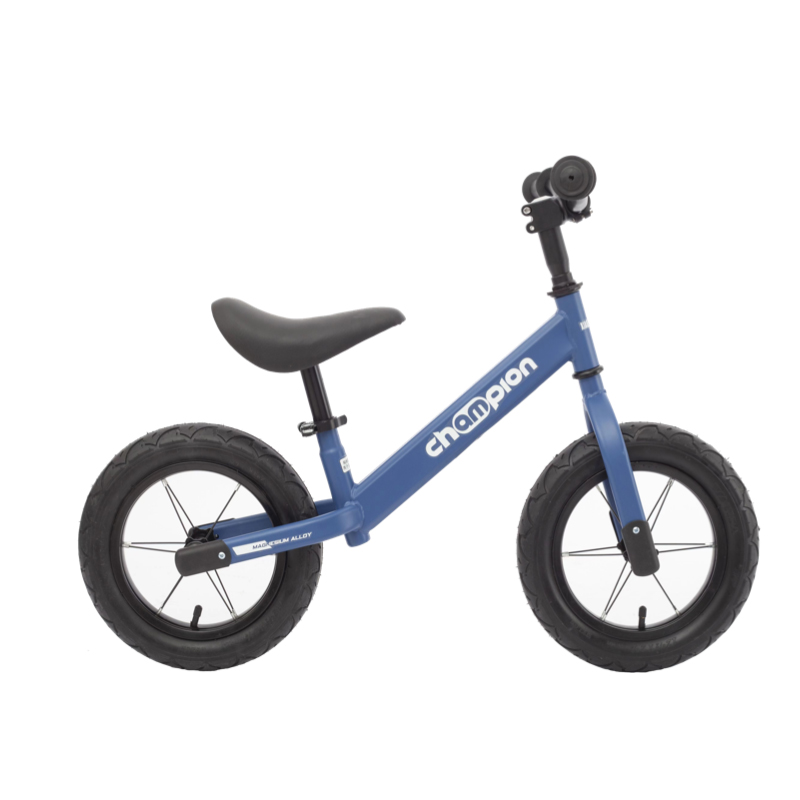
These models operate as two-wheeled frames entirely missing pedals and drivetrains. Children propel themselves forward using their own feet. They sit firmly on the saddle and push off the ground. This setup removes all mechanical complexity from the vehicle. It strips the experience down to basic momentum and steering. The child acts as the engine and the stabilizer simultaneously.
This minimalist approach builds incredible core muscle stability. It also enhances bilateral coordination across the child's entire body. From day one, it forces children to establish a natural center of gravity. They instinctively learn how to support their own body weight in dynamic motion. Pediatric physical therapists frequently praise this method. It aligns perfectly with natural gross motor development timelines. Children engage their abdominal and back muscles to stay upright, fostering healthier posture.
These frames vastly outperform traditional setups on uneven surfaces. You will see them excel on grass, gravel, and dirt paths. The child's feet act as immediate lateral stabilizers. They can safely traverse bumpy ground without tipping over sideways. This freedom expands where your family can practice riding. You do not need perfectly smooth asphalt. Toddlers can easily follow older siblings across park lawns or woodland trails.
Parents must prepare mentally for the initial "walking" phase. Children may simply walk over the frame for several weeks. They need time before they feel comfortable enough to lift their feet and glide. You must exercise patience during this early stage. Furthermore, early reliance on toe-dragging for deceleration presents a braking control issue. Parents must actively manage downhill gradients. You should avoid steep hills until your child learns how to operate mechanical hand brakes properly.
This represents the standard setup most adults remember from childhood. It features a standard pedaled bicycle fitted with rear lateral stabilizers. The extra wheels bolt onto the rear axle to prevent the frame from tipping. It turns a standard two-wheeler into a temporary four-wheeled vehicle. This provides an immediately stable platform for the rider.
This specific setup allows the child to experience forward momentum almost instantly. They learn the mechanical rhythm of pedaling right away. They feel highly successful immediately upon sitting down. For easily frustrated toddlers, this early win boosts their enthusiasm for riding. They can ride alongside parents on flat sidewalks without needing to balance their own weight.
Unfortunately, training wheels entirely prevent the bike from leaning. They create a rigid, false center of gravity for the rider. Because the frame cannot tilt, children learn to steer by turning the handlebars outward. They do not lean inward. This builds a counterproductive motor habit. They must unlearn this exact habit later to ride independently. The brain maps the wrong physical response to cornering.
These heavier frames face severe terrain limitations. They are highly susceptible to getting stuck on uneven pavement. A single stabilizer wheel dropping off a curb easily causes sudden tipping. Sidewalk crowning often leaves the rear drive wheel spinning uselessly in the air. Furthermore, the transition shock poses the biggest developmental hurdle. Removing the stabilizers abruptly introduces the missing balance requirement. The child is already fully accustomed to high speeds. This combination frequently causes frightening crashes and tears.
To evaluate these two methodologies objectively, we must compare their real-world outcomes. Let us examine how they handle skill acquisition, physical safety, and sizing.
Evaluation Criteria | Push-Propelled Methodology | Stabilizer Methodology |
|---|---|---|
Speed to Independent Riding | Transitions to pedal bikes typically occur rapidly, often within one afternoon. | Transitions frequently involve weeks of running behind the child holding the seat. |
Cornering Mechanics | Teaches correct inward leaning and body-weight shifting naturally. | Teaches incorrect outward handlebar turning, creating bad habits. |
Weight and Handling | Extremely lightweight, allowing small toddlers to maneuver easily. | Heavy frames and metal stabilizer brackets make handling cumbersome. |
Terrain Adaptability | Handles grass, dirt, and uneven sidewalks exceptionally well. | Requires flat, smooth pavement to prevent high-centering or tipping. |
We consistently see a massive difference in transition timelines. A child graduating from a push-bike usually transitions to a pedal bike flawlessly. They already know how to balance. They simply add the pedaling motion they can practice while stationary. Conversely, a child transitioning off stabilizers faces a terrifying learning curve. They already know how to pedal fast, but they possess zero balance skills. This mismatch slows down independent riding significantly.
We must evaluate how each method handles inevitable failure. On a push-bike, a child handles instability by simply putting their feet down flat. They catch themselves instinctively. This builds enormous psychological confidence. With stabilizers, a tipping event means the whole heavy frame goes down. The child cannot easily catch themselves because the pedals obstruct their legs. This leads to harder falls and faster loss of confidence.
Different setups require different purchasing strategies over time. The push-bike method requires a secondary purchase later on. You will eventually buy a larger pedal bicycle once they master equilibrium. Stabilizer bikes sometimes seem scalable. You can theoretically remove the wheels later. However, these frames often feature heavy steel components. This massive weight hinders early riders and makes the initial learning phase much harder physically.
Many parents ask about creating a hybrid solution. You can buy a standard pedal bicycle and temporarily remove the pedals and crank arms. This effectively simulates a push-bike. It addresses the need for equilibrium training first. However, standard bicycles feature heavy bottom brackets. Their geometry sits higher than dedicated push-frames. This extra weight and height might frustrate smaller, lighter toddlers attempting to control the frame.
Your child's current age strongly dictates the most effective intervention. Follow these specific guidelines to match their developmental window.
Ages 1.5 to 3: Default entirely to push-bikes for early motor skill adoption. Toddlers in this bracket lack the leg strength to push heavy metal drivetrains. They benefit immensely from the core stability work.
Ages 4 to 6: Carefully evaluate the child's height, inseam, and baseline coordination. Consider buying a much larger push-bike. Alternatively, choose a highly lightweight pedal frame and remove the pedals temporarily. Older kids catch on to equilibrium rapidly.
When selecting the physical frame, geometry dictates success more than visual appeal. You must look for a very low standover height. The child must stand flat-footed over the frame with an inch of clearance. Next, evaluate the tire materials. Pneumatic rubber tires offer superior traction and shock absorption. Solid EVA foam tires never go flat but slip easily on wet surfaces. Finally, assess the overall weight relative to the child. The total vehicle weight should never exceed 30% of the child's body weight.
Parents often struggle to know when to introduce pedals. Look for these three specific behavioral indicators. They prove a child is fully ready to move up to a pedal frame.
They confidently glide for long distances without touching the ground at all.
They seamlessly navigate wide, sweeping turns while holding their feet up in a glide.
They show acute awareness of spatial speed control, stopping safely on command.
The evidence overwhelmingly points in one specific direction. Push-bikes systematically isolate the hardest part of riding, which is dynamic equilibrium. By focusing entirely on balance, they prove structurally superior as a teaching tool for most children. They prevent the bad postural habits created by rigid stabilizers. They foster incredible confidence by allowing children to control their own safety by putting their feet down.
We strongly recommend aligning your purchase with your child's actual physical milestones. Do not rely blindly on age guidelines printed on boxes. Measure their inseam carefully. Choose a lightweight frame that allows flat-footed stability. Let them master balance at their own pace. When they finally transition to pedals, the process will feel magical rather than traumatic.
A: No, 5-year-olds are not too old. Many manufacturers produce larger 14-inch and 16-inch models specifically for older beginners. Older children acquire gross motor skills faster. They often master equilibrium in just a few days. You can also buy a lightweight pedal frame and simply unscrew the pedals to create an instant training tool.
A: Brakes are not strictly necessary for toddlers under three. They naturally use their feet to drag and stop. However, as children grow older and ride faster, a hand brake becomes crucial. It saves their shoes from rapid wear. It also teaches them mechanical braking before they transition to a faster, heavier pedal bicycle.
A: Doing this completely defeats the biomechanical purpose of the tool. The entire goal is to teach natural equilibrium and inward leaning. Adding stabilizers rigidly fixes the frame upright. It turns the vehicle back into a tricycle. It prevents the child from developing the core stability and spatial awareness required for true cycling.
A: Once a child can glide confidently and steer through turns, the transition takes remarkably little time. Most children master pedaling within one to two hours of practice. Because they already own the muscle memory for staying upright, they only need to learn the rhythmic forward pushing motion of the crank arms.


