
Views: 0 Author: Site Editor Publish Time: 2026-09-07 Origin: Site


Purchasing an electric bicycle represents a major upgrade in your daily mobility. The stakes remain incredibly high regarding safety and utility. You are integrating a powerful motorized vehicle into your daily routine. The current market presents severe saturation. You will encounter overwhelming options and confusing technical jargon. Many brands aggressively market exaggerated range claims. Navigating these choices without a clear strategy often leads to mismatched expectations. You need a structured approach to evaluate these machines accurately.
This guide provides a strict, evidence-based evaluation framework. We aim to help buyers match specifications to their exact daily requirements. You will learn how to decode motor types, assess true battery capacities, and navigate class regulations. Following these steps ensures you find the perfect ride. You avoid over-equipping while securing reliable daily transportation.
Purpose Dictates Geometry: Your choice between commuter, all-terrain, or cargo models fundamentally changes the required frame, suspension, and tire width.
Motor Placement Matters: Hub-drive motors offer budget-friendly flat-terrain commuting, while mid-drive motors are essential for steep hills and natural ride feel.
Class Regulations Define Utility: Choosing between Class 1, 2, or 3 dictates top speed and throttle availability, directly impacting local legal compliance and commute times.
Real-World Range Differs from Specs: Actual battery range is typically 20-30% lower than manufacturer max claims due to rider weight, terrain, and assist levels.
Selecting the correct frame geometry represents the foundation of your purchasing decision. Riders often make the mistake of buying hybrid models offering generic features. You must instead match the machine strictly to your primary riding environment.
Urban environments demand efficiency and agility. Commuter models utilize lighter aluminum frames and rigid forks. They feature upright geometries. This posture keeps your eyes level with vehicular traffic. You should look for models offering integrated lighting, robust fenders, and rear racks. Successful urban models prioritize low-maintenance components. They also feature slimmer tires for reduced rolling resistance on pavement.
Trail riding shifts your evaluation criteria entirely. Paved commutes require efficiency, but gravel and dirt require traction. All-terrain models utilize fat tires running at lower pressures. These tires absorb significant impact. You will need front suspension forks or full suspension systems. Frame integrity becomes critical here. The frame must withstand repeated stress from uneven surfaces.
Cargo models act as minivan replacements. Key dimensions include the payload capacity, often called the Gross Vehicle Weight Rating (GVWR). Extended wheelbases provide stability when carrying heavy loads. If you plan to haul children or groceries, structural rigidity is paramount. A high-quality cargo Electric Bike usually offers dual-battery compatibility. Hauling heavy loads drains single batteries incredibly fast.
Follow this numbered shortlisting process to avoid over-equipping:
Audit your intended route. Determine the exact surface types you will ride on daily.
Calculate the percentage of pavement versus unpaved trails.
Eliminate categories failing to match 80% of your actual daily riding environment.
Discard heavy fat-tire models if you strictly ride on smooth city streets.
Regulatory classes define how fast your motor assists you and how you engage it. Understanding these tiers ensures legal compliance on your local routes.
Class 1 models provide motor assistance only while you actively pedal. The motor stops helping once you reach 20 mph. These models deliver the most natural cycling feel. Municipal trail networks highly accept Class 1 models. They rarely face bans on multi-use paths because they mimic traditional bicycle speeds.
Class 2 models introduce a throttle mechanism. You can propel the vehicle without pedaling at all. The motor still cuts off at 20 mph. Throttles prove essential for riders carrying heavy cargo. They also help riders with physical limitations start from a dead stop. Intersections feel much safer when you can accelerate instantly.
Class 3 models represent the standard for long-distance commuters. They provide pedal-assist up to 28 mph. Throttles are typically absent or restricted to 20 mph. The higher top speed allows you to safely keep up with urban traffic flows. You reduce commute times significantly over long distances.
You must check local state and trail regulations before purchasing. Authorities frequently ban Class 2 and Class 3 models on non-motorized trail networks. Riding a Class 3 model on a restricted mountain bike trail can result in heavy fines.
E-Bike Class Comparison
Classification tier | Top Assisted Speed | Throttle Included? | Best Use Case |
|---|---|---|---|
Class 1 | 20 mph | No | Multi-use paths, fitness riding |
Class 2 | 20 mph | Yes | Cargo hauling, mobility assistance |
Class 3 | 28 mph | No (usually) | Traffic-heavy urban commuting |
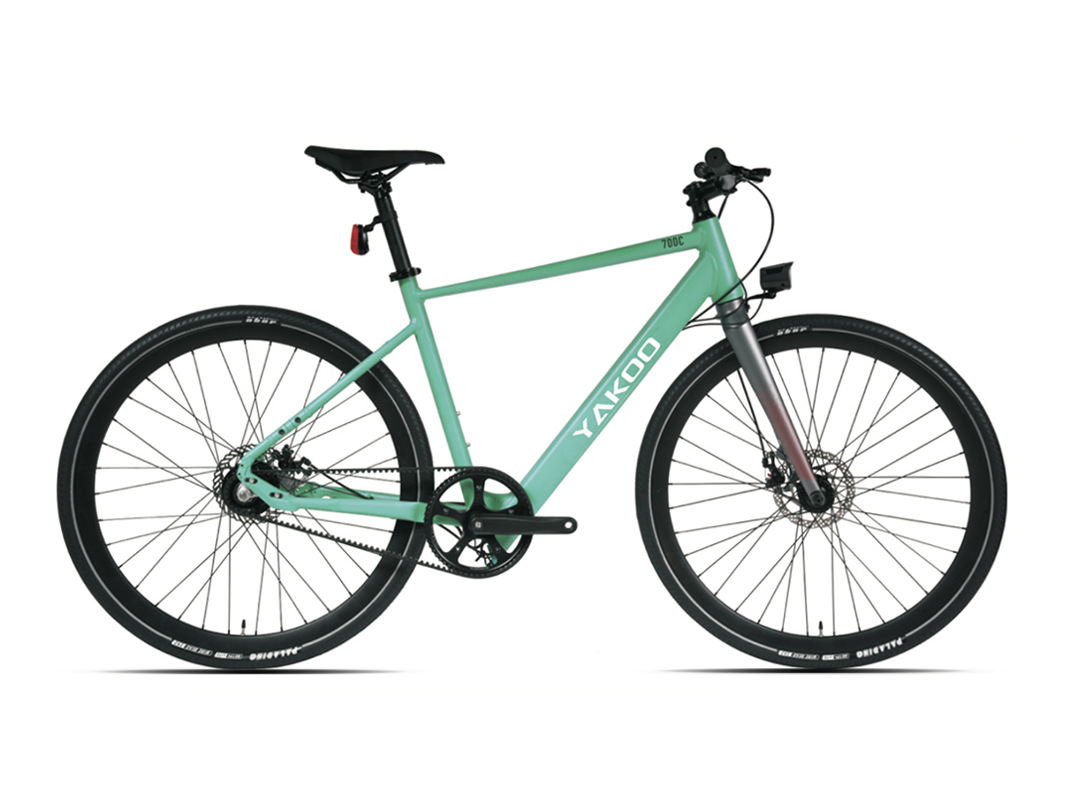
Motor placement fundamentally dictates handling, efficiency, and maintenance requirements. You must choose between hub-drive and mid-drive technologies based on your local topography.
Manufacturers install hub-drive motors inside the center of the front or rear wheel. Rear hub motors dominate the current market.
Pros: They operate completely independently of the bicycle's drivetrain. If your chain breaks, you can still use the throttle to get home. They generally utilize simple cadence sensors.
Cons: Hub motors often feel jerky during acceleration. They push the wheel rather than amplifying your pedal stroke. They operate less efficiently on steep hills. Fixing a rear flat tire becomes mechanically complex due to motor wiring.
Engineers mount mid-drive motors directly at the pedals (the bottom bracket). This placement integrates the motor with your standard gears.
Pros: Mid-drives leverage your rear cassette. When you shift into an easy gear for a hill, the motor also shifts into an easy gear. This provides superior hill-climbing power. The central weight distribution drastically improves handling. They utilize torque sensors for a highly natural ride feel. They also maximize battery efficiency.
Cons: They accelerate drivetrain wear. Your chains and cassettes will require more frequent replacement. A mid-drive E-Bike demands diligent shifting habits to prevent chain snapping.
Assess your daily route elevation. If your commute features grades exceeding 10%, a mid-drive represents a functional necessity. Hub motors will overheat and stall on sustained, aggressive inclines. Treat mid-drives as mandatory equipment for mountainous regions, not luxury upgrades.
Battery specifications confuse many first-time buyers. You must look past marketing claims to understand true energy capacity and real-world range.
Watt-Hours (Wh) represent the only reliable metric for battery size. You calculate Wh by multiplying Volts (V) by Amp-Hours (Ah). For example, a 48V 10Ah battery equals 480Wh. Standard urban commuters require at least 400Wh for reliable daily use. Long-range riders or cargo haulers should demand 500Wh or more.
Brands calculate their maximum advertised range using highly unrealistic conditions. They test a 150lb rider on perfectly flat ground. They use the lowest pedal-assist setting. They often test with a tailwind. We advise buyers to cut the advertised range by 25% to 30%. This deduction creates a realistic baseline. Your weight, cargo, tire pressure, and reliance on higher assist levels severely deplete the battery.
Frame integration protects batteries from weather and impacts. However, removability dictates security. If you store your vehicle in a public garage or outside, a removable battery is mandatory. You must take the battery inside for secure charging. Thieves rarely steal models missing their power source.
Lithium-ion cells degrade over time. You can expect standard batteries to last roughly 3 to 5 years. This equals about 500 to 1000 full charge cycles before capacity drops significantly. Always verify the manufacturer sells standalone replacement batteries. Avoid brands relying on proprietary shapes without a verified supply chain.
Long-term satisfaction depends on logistical support and mechanical reliability. You must plan for assembly, secure storage, and specialized maintenance.
Your purchasing channel determines your support network. Direct-to-Consumer (DTC) brands ship directly to your door. This requires you to perform home assembly. You also risk a severe lack of local repair support. Local Bike Shops (LBS) offer established models with professional assembly. Choosing an LBS ensures warranty backing, reliable mechanics, and guaranteed firmware updates.
Motorized bicycles require specialized logistical gear. Standard equipment often fails under increased weight and speed.
Security: Mitigating high theft risk demands heavy-duty hardware. You must use thick U-locks paired with hardened steel chains.
Transportation: Standard car racks cannot support 60-pound vehicles. You will need specialized, hitch-mounted vehicle racks rated for heavy payload capacities.
Wear and Tear: Increased speed accelerates mechanical degradation. Brake pads and chains wear out twice as fast compared to traditional bicycles.
Focus strictly on component reliability over electronic gimmicks. Reputable mechanical disc brakes from known manufacturers perform better than unbranded, cheap hydraulic brakes. Prioritize strong welds, reliable shifting mechanisms, and certified battery cells. Reliable mechanical foundations keep you riding daily.
Choosing the perfect model requires a disciplined evaluation of your daily routine. First, determine your legal Class requirement based on local trails and traffic needs. Second, select the motor type and frame geometry matching your terrain. Third, calculate the true Watt-Hours needed for your real-world commute. Finally, decide between the robust support of a local dealer or the self-reliance required for online models.
Your next step involves practical testing. We strongly recommend test-riding your top two configurations at a local dealer. You need to feel the physical weight, assess the motor engagement, and test the brakes before finalizing any purchase.
A: Yes. They typically weigh between 45 and 75 pounds. Motors, batteries, and reinforced frames add significant mass. You must consider this weight if you live in a walk-up apartment or need to carry the vehicle up stairs daily.
A: Always remove the battery when parking publicly. This reduces the vehicle's value. Use a heavy-duty U-lock through the rear triangle and a thick secondary chain for the front wheel. Hiding a GPS tracker inside the frame offers excellent recovery assistance.
A: Yes, provided the components have a proper IP (Ingress Protection) rating. Most quality models are water-resistant, meaning they handle light rain and puddles safely. However, they are not completely waterproof. You should never submerge the motor or battery in deep water.
A: Many shops refuse to service uncertified Direct-to-Consumer models. They do this to avoid liability regarding uncertified batteries or faulty electrical systems. You should always call your local shop beforehand to verify they service your specific brand.


