
Views: 0 Author: Site Editor Publish Time: 2026-09-15 Origin: Site


A failed hub deep in the backcountry turns a great ride into a long hike. The rear hub endures massive torsional loads from the drivetrain and lateral impacts from the trail. The mountain bike industry iterates rapidly. Axle spacing, driver bodies, and engagement mechanisms constantly evolve to handle modern riding styles. This creates a fragmented landscape for riders. Selecting a replacement requires navigating proprietary standards and conflicting compatibility requirements. A successful upgrade relies on systematic evaluation. You must assess frame constraints, drivetrain ecosystems, and mechanical trade-offs. Balancing engagement speed, drag, and long-term durability ensures your wheelset performs reliably under pressure. Understanding the internal mechanics prevents costly purchasing errors and keeps your bike rolling smoothly through the harshest conditions.
Compatibility Dictates Choice: Frame axle spacing (Boost vs. SuperBoost) and cassette ecosystem (HG, XD, MicroSpline) instantly narrow the viable options for any bicycle hub upgrade.
Engagement Has Diminishing Returns: While high Points of Engagement (POE) improve technical climbing, they introduce increased mechanical drag and potential suspension interference (pedal kickback).
Serviceability Over Flash: Long-term hub value is determined by bearing availability, tool-free maintenance capabilities, and the resilience of the internal drive mechanism under high-torque loads.
System Stiffness Relies on Geometry: Hub flange width and diameter directly influence the "triangle rule" of wheel building, dictating the ultimate lateral stiffness of the finished wheelset.
The basic functional role of any Bicycle Hub is acting as the central anchor. It holds the entire wheel structure together. The hub connects to the rim through spokes under high tension, often exceeding 120 kilogram-force (kgf) per spoke. This tensioned structure supports rider weight, absorbs trail impacts, and transfers rotational force directly to the ground. Without a rigid and reliable center, the wheel collapses under lateral loads.
The hub shell and flanges form the structural foundation. Flange spacing and diameter dictate spoke bracing angles. Wider flanges push the spokes outward at a steeper angle toward the rim. This creates a broader base at the hub, directly impacting lateral wheel stiffness. Wheel builders refer to this as the "triangle rule." A wider triangle base yields a stiffer, more predictable wheel that resists folding in hard corners. Taller flanges also change the spoke angle, allowing shorter spokes which further increases overall wheel rigidity. However, taller flanges require more material, adding rotational weight to the center of the wheel.
Inside the shell, axles and bearing layouts manage friction and load. The axle remains stationary, clamped tightly by the frame dropouts, while the shell rotates around it. Axles are typically machined from aluminum to save weight, though heavy-duty hubs utilize chromoly steel to prevent flex under load. Front hubs generally utilize two bearings, placing one on each side of the shell. Rear hubs handle much more complex forces. They require four or more bearings to support both the axle and the freehub body under heavy pedaling loads and chain tension.
Common bearing sizes like 6902 or 6903 dictate the size of the steel balls inside. Larger bearings handle higher loads but add weight. The industry has largely shifted away from adjustable cup-and-cone systems. Standard sealed cartridge bearings now dominate. Cartridge bearings offer easier replacement, better tolerance consistency, and superior weather sealing against mud and water. Mechanics can easily extract worn cartridge bearings using a blind puller and press new ones in with a standard threaded bearing press.
The freehub body serves as the mechanical center for power transfer. It performs a dual role. First, it houses the internal engagement mechanism that catches when you pedal forward and releases when you coast. Second, it provides the external mounting interface for your cassette. The material of the freehub body determines its resistance to cassette bite and overall rotational weight. Aluminum bodies save weight but are prone to gouging from steel cassette cogs. Steel or titanium bodies resist gouging entirely, making them ideal for high-torque applications.
Hub standards dictate both the width and the axle diameter. Common rear diameters include 12mm, while fronts use 15mm. Legacy downhill bikes sometimes feature 20mm front axles for maximum stiffness. These dimensions must perfectly match your frame and fork dropouts. You cannot force a mismatched hub into a frame without risking severe structural damage.
Older non-Boost standards include 135mm quick-release and 142x12mm thru-axle designs. These narrower platforms limit wheel stiffness, especially for modern 29-inch wheels. The narrow flange spacing creates a steep spoke bracing angle, resulting in wheels that flex heavily under side loads. These standards remain relevant only for older frames, dirt jumpers, or specific cross-country applications where lateral stiffness is less critical. Finding high-end aftermarket hubs in 142mm spacing is becoming increasingly difficult as manufacturers phase out legacy production lines.
Boost spacing represents the modern industry baseline. It measures 148x12mm in the rear and 110x15mm in the front. The extra width allows hub flanges to be pushed outward by several millimeters on each side. This optimizes spoke bracing angles for larger wheels, effectively curing the flex issues that plagued early 29ers. Boost is the mandatory standard for most modern trail and enduro bikes. It provides a noticeable increase in tracking precision through rough terrain. Furthermore, Boost spacing pushes the drivetrain outward by 3mm, creating a 52mm chainline that allows frame manufacturers to design shorter chainstays while maintaining clearance for wide 2.4-inch to 2.6-inch tires.
SuperBoost Plus measures 157x12mm in the rear. This standard targets heavy-duty applications like downhill racing, heavy e-bikes, and aggressive enduro riding. It offers massive wheel stiffness by pushing the flanges even wider, creating a nearly symmetrical spoke bracing angle on both the drive and non-drive sides. However, the wider profile introduces potential heel-clearance issues on certain frames. Riders with large feet may find their heels rubbing the wider chainstays required to clear a SuperBoost hub. It also requires a specific 55mm or 56.5mm chainline crankset to ensure proper shifting performance.
Front hubs feature specific nuances regarding fork interfaces. RockShox forks often utilize Torque Caps. These oversized end caps increase the surface area between the hub and the fork dropout. They improve steering precision and torsional stiffness compared to standard 110x15mm end caps. While standard caps still fit into a Torque Cap fork, aligning the axle during installation becomes slightly more cumbersome because the hub does not self-center in the oversized dropouts.
Axle Standard | Front Dimensions | Rear Dimensions | Primary Application |
|---|---|---|---|
Non-Boost (Legacy) | 100x15mm | 142x12mm | Older mountain bikes, gravel bikes, dirt jumpers |
Boost | 110x15mm | 148x12mm | Modern XC, Trail, and Enduro bikes |
SuperBoost Plus | 110x20mm (DH) / 110x15mm | 157x12mm | Downhill, aggressive Enduro, heavy E-bikes |
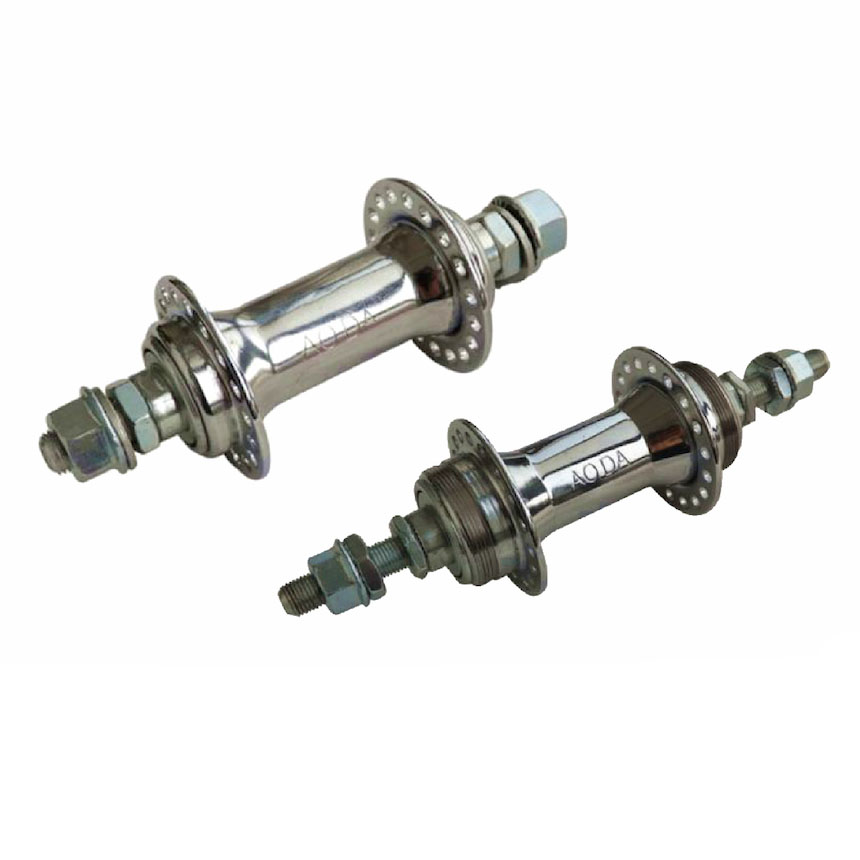
Shimano HG (Hyperglide) is the traditional splined standard. It served the industry for decades as the universal mounting system. Its primary limitation is physical size. The HG body diameter cannot accept cogs smaller than 11 teeth. As drivetrains evolved to require wider gear ranges, the 11-tooth limitation became a liability. Today, the HG standard is mostly relegated to entry-level drivetrains, older 10-speed systems, or specific heavy-duty e-bike applications where smaller cogs wear out too quickly under motor torque.
SRAM XD provides an engineering solution for modern wide-range cassettes. It accommodates 10-tooth high-gear cogs, allowing for massive gear ranges. The XD standard uses a threaded cassette installation method. The cassette threads directly onto the driver body rather than sliding onto splines. This design dominates SRAM 11-speed and 12-speed ecosystems. It also prevents the cassette from gouging the driver body, a common issue with aluminum HG drivers. When installing an XD cassette, mechanics must apply anti-seize or high-quality grease to the threads; installing it dry often results in the cassette permanently seizing to the driver body.
Shimano MicroSpline represents Shimano’s modern 12-speed standard. It requires a smaller diameter driver to fit a 10-tooth cog. MicroSpline features a dense, 23-spline design. This specific layout distributes the pedaling load across a much larger surface area. It prevents individual cassette cogs from biting into lightweight aluminum freehub bodies under high torque. MicroSpline is required for all current Shimano 12-speed mountain bike drivetrains, from Deore up to XTR.
Matching your cassette to the correct driver body requires careful evaluation before purchasing. Many high-end manufacturers offer interchangeable drivers. This modularity helps future-proof your wheelset investment. If you switch from a SRAM drivetrain to a Shimano drivetrain next season, a modular hub allows you to simply swap the driver body rather than rebuilding the entire wheel.
To successfully swap a modular freehub body on a modern Bicycle Hub, follow these specific mechanical steps:
Remove the rear wheel from the frame and extract the thru-axle.
Pull the drive-side end cap off the axle. Many modern hubs allow you to do this by hand, though some require a soft-jaw axle vise.
Grasp the cassette and pull outward to slide the entire freehub body off the axle shaft.
Clean the exposed engagement mechanism (pawls or ratchets) with a dry rag and apply the manufacturer-specified grease.
Slide the new freehub body onto the axle, rotating it counter-clockwise slightly to compress the pawls or seat the ratchets.
Press the correct drive-side end cap back onto the axle until it clicks into place.
Traditional pawl systems use spring-loaded teeth. These pawls engage a toothed drive ring pressed into the hub shell. The design is cost-effective and typically produces low mechanical drag when coasting. However, pawl systems often suffer from asymmetrical load distribution. Due to manufacturing tolerances, only one or two pawls might take the entire pedaling force at the exact moment of engagement. This creates potential for skipping, chipping, or catastrophic mechanical failure under extreme torque, especially in low gears on steep climbs. Manufacturers combat this by using multi-tooth pawls or offset pawl layouts that double the points of engagement, though this increases internal complexity.
Star ratchet or ring drive systems offer a robust alternative. They rely on the simultaneous engagement of two toothed rings pushed together by springs. This premium standard maximizes reliability. The symmetrical load distribution handles high torque exceptionally well because all teeth engage at the exact same time. These systems also allow for simple, tool-free maintenance. You can pull the freehub body off by hand, clean the rings, apply fresh grease, and reassemble the system in minutes. Ratchet systems are highly favored by heavy riders and e-bike users due to their sheer mechanical strength.
Points of Engagement (POE) dictate how fast the hub catches when you pedal. You calculate engagement degrees by dividing 360 by the POE. A 36-tooth ratchet offers 10 degrees of engagement. A 120-POE hub engages in just 3 degrees. Faster engagement feels highly responsive. It allows riders to ratchet their pedals through technical rock gardens without striking their cranks on obstacles. Instant engagement provides a distinct advantage on technical, ratchety climbs where full pedal strokes are impossible.
High-engagement hubs require an objective reality check. Ultra-high engagement (100+ POE) introduces distinct mechanical drawbacks. Tightly packed teeth increase coasting drag, slowing the bike down on smooth descents. They generate louder freewheel noise, which some riders find distracting. Most critically, high engagement exacerbates pedal kickback on full-suspension mountain bikes.
As the rear suspension compresses, the distance between the bottom bracket and the rear axle increases. This chain growth pulls backward on the cassette. A hub with low engagement allows the cassette to spin backward freely within the dead space between engagement points. A high-engagement hub catches immediately, transferring that backward force directly into the chain and the pedals. This negatively impacts suspension performance during fast, rough descents, making the rear end feel harsh and causing fatigue in the rider's legs.
Mechanism Type | Load Distribution | Maintenance Difficulty | Drag Level |
|---|---|---|---|
Standard 3-Pawl | Asymmetrical | Moderate (Requires picks for springs) | Low |
Offset 6-Pawl | Semi-symmetrical | Moderate | Medium |
Star Ratchet | 100% Symmetrical | Easy (Tool-free) | Low to Medium |
Sprag Clutch | Instant / Friction based | High (Requires proprietary tools) | Very Low |
Material durability must balance against weight limits. Lightweight alloy hubs suit cross-country and light trail riding where rotational weight heavily impacts acceleration. Enduro and e-bike applications demand reinforced steel internals or oversized alloy shells. High-torque motors and aggressive riding easily destroy lightweight components. Steel freehub bodies add weight but completely eliminate cassette bite and resist the immense twisting forces generated by modern e-bike motors. When selecting a hub for an e-bike, verify that the manufacturer explicitly rates the internal drive mechanism for motor-assist torque loads.
The spoke interface presents another choice for custom wheel builds. Hubs are drilled for specific spoke counts, typically 28 or 32 holes for mountain bikes. J-bend spokes represent the universal standard. They offer excellent availability and ease of replacement in remote areas. Any local bike shop carries J-bend spokes. When laced in a traditional 3-cross pattern, J-bend hubs create an incredibly resilient wheel that absorbs trail chatter effectively. The 3-cross pattern ensures that each spoke crosses three others between the flange and the rim, optimizing torque transfer from the hub to the tire.
Straight-pull spokes eliminate the bent weak point at the flange. They provide theoretical marginal weight savings and facilitate automated wheel building in large factories. However, straight-pull spokes can spin during truing, making wheel maintenance more difficult. Sourcing exact length straight-pull replacements mid-trip can be nearly impossible. For self-supported riders and privateer racers, J-bend hubs remain the superior choice for field serviceability.
Serviceability dictates long-term ownership value. A premium aftermarket hub only remains useful if replacement parts are readily available globally. Bearings, springs, and drive rings wear out over time. Tool-free disassembly allows for quick trailside maintenance and easy cleaning. Hubs requiring proprietary tools for basic bearing swaps increase maintenance costs and downtime. Always check the availability of replacement bearing kits and freehub bodies before committing to a specific brand. A hub that uses standard 6902 bearings can be serviced at any industrial bearing supply shop, whereas hubs with custom-machined proprietary bearings force you to rely entirely on the manufacturer's supply chain.
The performance ratio requires a realistic assessment. Premium aftermarket hubs make sense for custom wheel builds, aggressive riding, and high-torque applications. They offer modularity, superior sealing, and high-quality bearings that last multiple seasons. For casual riders or budget builds, a reliable entry-level OEM replacement hub with standard sealed bearings often suffices, provided it matches the frame standards. The performance gap between mid-tier and top-tier hubs is often noticed in longevity, weather sealing, and serviceability rather than pure trail speed.
Measure your frame's rear dropout spacing using digital calipers to confirm whether you need a 148mm Boost or 157mm SuperBoost hub.
Identify your current cassette mounting standard by inspecting the lockring or base threads to ensure you order the correct HG, XD, or MicroSpline driver body.
Pull your current freehub body to inspect the engagement mechanism and bearing condition before deciding if a full hub replacement is necessary.
Consult a spoke length calculator or a professional wheel builder if you plan to lace the new hub to an existing rim, as flange dimensions will change the required spoke length.
A: Yes, spacer kits exist to adapt 142mm hubs to 148mm frames. These kits use longer end caps and a rotor spacer. However, this method fails to gain the structural stiffness benefits of true Boost spacing, as the hub flanges remain narrow. It also complicates wheel installation.
A: Look at the cassette mounting interface. A standard lockring with internal splines indicates a Shimano HG body. A cassette that appears integrated and threads on at the base is SRAM XD. A lockring with very fine, dense splines indicates Shimano MicroSpline.
A: A range of 36 to 54 points of engagement offers the best compromise. This provides quick power transfer for technical climbing while minimizing suspension interference, pedal kickback, and mechanical drag on fast descents.
A: Generally, no. Standard high-quality steel bearings offer better durability against water, mud, and grit for off-road use. Ceramic bearings excel in clean, high-speed environments but are prone to premature failure when exposed to mountain biking conditions.
A: Most modern, high-quality aftermarket hubs feature modular, swappable driver bodies. You can easily swap from XD to MicroSpline. However, budget OEM hubs often lack this modularity, requiring a complete hub replacement.
A: Hub noise stems from pawl or ratchet tension and the type of factory grease used. You can slightly dampen the sound by applying a manufacturer-approved grease. Never use heavy marine grease, as it can cause the engagement mechanism to stick and fail.


