
Views: 0 Author: Site Editor Publish Time: 2026-08-03 Origin: Site


Early childhood cycling education has undergone a massive shift in recent years. Parents are rapidly moving away from traditional tricycles and heavy stabilizers. Instead, they are turning toward modern strider designs as the preferred starting point. This shift raises a critical dilemma for many families evaluating their options. You might wonder if a strider serves as a necessary developmental tool or just a redundant purchase before buying a standard Kids Bike. It can be incredibly hard to separate marketing hype from actual physiological benefits.
We will take a skeptical, evidence-based approach to answer these questions. This guide evaluates pediatric physical therapy consensus, institutional cycling standards, and verifiable safety realities. Ultimately, we will help you determine the true developmental return on investment of these popular riding tools. You will understand precisely how they affect motor skills and transition times.
Balance bikes decouple the cognitive load of riding by teaching balance and spatial awareness before pedaling mechanics.
Evidence from pediatric physical therapists suggests early striding improves bilateral coordination and gross motor skills.
Compared to training wheels, balance bikes prevent the formation of incorrect steering habits, leading to faster, safer transitions to a pedal kids bike.
Purchase viability depends on specific evaluation criteria: a bike exceeding 30% of a child's body weight will actively hinder development.
Neurological hurdles present significant challenges for toddlers learning to ride. A young child's brain processes a tremendous amount of sensory data during physical activity. Attempting to pedal, steer, and balance simultaneously overloads their processing capacity. Balance Bikes actively decouple this cognitive load. They remove the complex mechanical action of pedaling entirely. This isolation allows the rider to focus strictly on the hardest skill to master: balancing.
Institutional cycling consensus strongly supports this separation of skills. Frameworks provided by organizations like USA Cycling highlight a major deficit caused by traditional training wheels. Stabilizers falsely teach children how to steer. On a stabilized bike, riders turn the handlebars outward to change direction. However, riding a true two-wheeler requires leaning into the turn. Training wheels ingrain rigid, incorrect steering habits. Children must painfully unlearn these habits later. Starting without stabilizers prevents these incorrect mechanics from forming in the first place.
Proprioception and center of gravity management also improve drastically. Toddlers need a safe environment to experiment safely. Keeping their feet near the ground provides immediate security. They can shift their center of mass and feel angular momentum naturally. If they tip too far, they instinctively plant a foot. They learn the tipping point without experiencing a traumatic fall. This builds immense confidence and promotes faster skill acquisition.
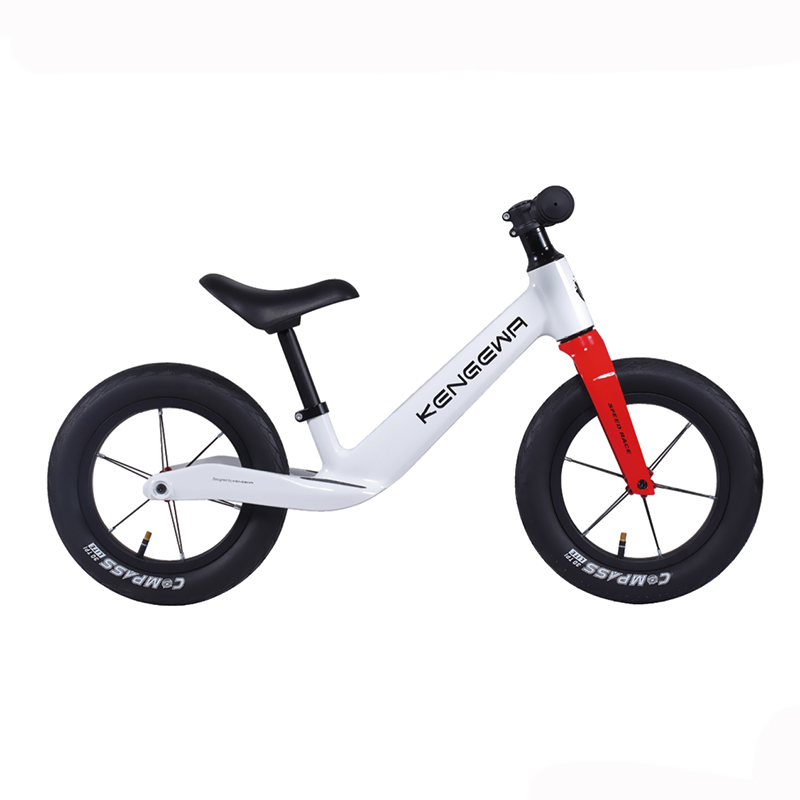
The physical mechanics of the "stride and glide" motion offer profound neurological benefits. Pediatric physical therapists frequently highlight how alternating leg movements support bilateral coordination. As a child pushes off using alternating legs, both sides of the brain must communicate rapidly. This cross-hemisphere brain development proves crucial for early childhood gross motor skills. The gliding motion forces the body to process spatial awareness dynamically.
Core stabilization represents another major developmental advantage. Consider the posture required on a traditional tricycle. The wide, flat seat bears the entire weight of the rider. The child sits passively. Conversely, striding requires active muscular engagement. Riders must constantly fire their core and lateral muscles to maintain an upright posture. This active engagement strengthens the abdominal wall and improves overall postural control. It demands physical effort across multiple muscle groups.
Transition efficiency remains the most celebrated outcome of this method. The typical learning trajectory accelerates significantly. Children mastering the glide motion generally bypass stabilizers completely.
They establish core balance and confident steering.
They learn to navigate uneven terrain confidently.
They transition to a pedal Kids Bike seamlessly.
This leap often occurs months or even years earlier than the historical average. Parents frequently report their children riding standard pedal models independently by age three or four.
Demonstrating trustworthiness requires addressing valid parental anxieties and objective downsides. The most common frustration involves the braking dilemma. "Foot-stopping" remains an inevitable reality for early riders. Toddlers will drag their feet to slow down. This action will quickly ruin the soles of their shoes. While some models feature hand brakes, children under three generally lack the required grip strength to use them effectively. Parents must accept increased shoe wear as a temporary reality.
Downhill speed management presents a genuine safety risk. These frames rely entirely on freewheeling. Since there are no pedals to regulate speed or provide resistance, momentum builds rapidly. Toddlers can easily lose control on steep gradients. Strict parental supervision is absolutely mandatory. Flat-ground training remains essential until the child demonstrates advanced speed control and spatial awareness.
Ergonomic and joint concerns frequently appear on parenting forums. Parents often worry about potential knee strain or hip dysplasia. Medical professionals explain these joint issues remain virtually nonexistent if parents configure the equipment correctly. Poor posture only occurs on improperly sized frames. You must ensure the seat-to-inseam height allows the child's feet to rest flat on the ground. The knee should maintain a slight bend. This specific geometry prevents awkward gait patterns and protects developing joints.
Determining readiness depends heavily on the child's specific developmental stage. The 18 to 24-month window represents early introduction. At this stage, focus primarily on walking stability. The frame serves essentially as a walking aid rather than a riding tool. Toddlers will simply stand over the saddle and walk it forward. This phase requires ultra-lightweight frames. Indoor-friendly setups work best, allowing the child to explore at a slow pace in a controlled environment.
The two to three-year-old range serves as the peak adoption window. This marks the most effective stage for mastering the actual "glide." Children in this bracket possess the strength to lift their feet for extended periods. Focus heavily on frame geometry during this stage. The design must allow for full stride extension. A cramped cockpit restricts leg movement and hinders proper muscle memory development.
Children aged three to five represent a transition crossroad. Many parents wonder how to handle late adopters. You must evaluate the practical use case carefully. Buying a large Balance Bikes model specifically for a four-year-old might offer limited longevity. Alternatively, you could purchase a standard 14-inch pedal model and temporarily remove the pedals. While this approach skips buying two separate frames, pedal models weigh significantly more. Ensure the heavier frame does not discourage a late learner from practicing.
Applying a strict framework for assessing features ensures you make an optimal choice. The weight-to-rider ratio stands as the absolute golden rule of selection. The frame must weigh no more than 30% of the child’s total body weight. Heavy steel frames lead directly to frustration. A toddler cannot maneuver or right a heavy frame independently. This inevitably results in quick abandonment of the activity.
Tire material significantly impacts both weight and terrain capability. You generally choose between EVA foam and pneumatic options. Understand the distinct trade-offs before deciding.
Material Type | Key Advantages | Primary Limitations | Best Use Case |
|---|---|---|---|
EVA Foam | Puncture-proof, extremely lightweight, maintenance-free. | Lacks traction, minimal shock absorption, wears down over time. | Indoor use, smooth pavement, children under 2.5 years old. |
Pneumatic (Air-filled) | Superior grip, excellent shock absorption, authentic riding feel. | Adds overall weight, requires occasional inflation, risk of flats. | Grass, gravel trails, outdoor park riding, children over 3. |
Geometry and adjustability determine the longevity of the equipment. Children grow rapidly, and the frame must adapt. Ensure the minimum seat height can drop at least one inch below the child's current inseam. This buffer allows them to plant their feet firmly from day one. Look for quick-release seat clamps to make micro-adjustments easily during park visits.
Finally, assess brake inclusion carefully. A rear V-brake provides excellent developmental value for older toddlers. While a two-year-old cannot squeeze it, we strongly recommend models featuring hand brakes for children aged three and older. Introducing a hand brake early builds critical muscle memory. It teaches them how to moderate speed manually prior to the pedal transition.
Evaluating the evidence clarifies the developmental value of early cycling tools. They are definitively not a passing gimmick. They serve as structurally sound, highly effective instruments for teaching fundamental riding mechanics. By decoupling the cognitive load of pedaling, they allow children to master balance safely. This approach prevents incorrect steering habits and strengthens bilateral coordination.
For your next step, avoid looking directly at product recommendations or arbitrary age charts. Instead, measure your child’s exact barefoot inseam. Weigh them accurately on a home scale. Use these two concrete metrics to filter out overly heavy or improperly sized models. This targeted approach ensures a successful, frustration-free introduction to cycling.
A: Yes, they drastically accelerate the learning timeline. By mastering spatial awareness and center of gravity first, children skip the training wheel phase entirely. Most transition straight to a pedal bike months or even years earlier than those using traditional stabilizers.
A: Not if sized correctly. Joint issues or awkward gait patterns only occur when the seat is positioned improperly. You must ensure the seat height allows the child's feet to rest flat on the ground while maintaining a slight, comfortable bend in the knee.
A: You can, but it carries drawbacks. While this method saves money, traditional pedal frames weigh significantly more than dedicated early-rider models. This extra bulk makes the frame much clunkier and significantly harder for a two-year-old to maneuver independently.
A: Look for clear behavioral markers. The child should demonstrate consistent gliding for extended distances. They must navigate turns smoothly without putting their feet down for stability. Finally, transitioning makes sense once they physically outgrow the maximum seat height of their current frame.


