


If you’ve ever been around toddlers at a park, a neighborhood sidewalk, or even a college town with young families, you’ve probably seen a tiny kid zooming by on what looks like a bike… but without pedals. That’s a balance bike, and honestly, it’s one of those simple ideas that makes you wonder why it took so long to become popular.
Balance bikes aren’t just a trend or a cute toy for Instagram photos. They’ve actually changed the way kids learn how to ride a bike, and there’s a lot more going on behind the scenes than people realize.
So let’s break it down in a clear, practical way: what a balance bike is, how it works, why parents love it, and whether it actually makes a difference compared to traditional bikes with training wheels.
A balance bike is a small, lightweight bicycle designed for young children, usually between the ages of 18 months and 5 years. Unlike a traditional bike, it does not have pedals, a chain, or training wheels. Instead, kids sit on the seat, push themselves forward with their feet, and focus on learning how to balance and steer.
At first glance, it might seem too simple to be effective. No pedals? No gears? No brakes sometimes? But that simplicity is the entire point.
The main goal of a balance bike is to teach balance first, which is the hardest part of riding a bike. Pedaling is actually easier to learn once balance is already second nature.
Most balance bikes have:
A low frame so kids can easily get on and off
An adjustable seat and handlebar
Lightweight materials like aluminum or wood
Air-filled or foam tires
A simple hand brake on some models
By keeping things minimal, kids can focus on controlling their body and the bike instead of worrying about pedaling at the same time.
The way a balance bike works is surprisingly intuitive. Kids use their feet to push off the ground, walk the bike forward, and eventually glide once they feel stable enough.
At the beginning, most kids “walk” the bike. Their feet stay close to the ground, and they take short steps while sitting on the seat. Over time, they naturally start lifting their feet for a second or two. That moment right there is when balance starts to click.
Eventually, many kids will glide for several seconds at a time, feet off the ground, steering smoothly and confidently. By the time that happens, they’re already doing the hardest part of biking without even realizing it.
One underrated benefit of balance bikes is that they feel less scary. Kids can always put their feet down instantly. There’s no feeling of being “stuck” on the bike, which makes them more confident and willing to try.
This confidence matters a lot. Kids who feel in control are more likely to experiment, learn faster, and enjoy the process instead of getting frustrated.
This is probably the biggest question parents ask: why choose a balance bike instead of a regular bike with training wheels?
Training wheels teach pedaling first, not balance. The problem is that balance is the foundation of riding a bike. When kids rely on training wheels, they don’t learn how to balance naturally. Later, when the training wheels come off, many kids feel like they’re starting over.
With a balance bike, the learning order is flipped. Kids master balance first, then add pedaling later.
Many kids who start on a balance bike skip training wheels entirely. When they move to a pedal bike, they already know how to balance and steer. All they need to learn is how to pedal, which usually takes a short amount of time.
I’ve seen kids make that transition in a single afternoon. That’s not an exaggeration.
Balance bikes allow kids to lean into turns, adjust their posture, and respond to speed changes naturally. Training wheels keep the bike upright artificially, which can actually make turning and stopping harder in the long run.
Most balance bikes are designed for kids starting around 18 months, though some kids may not be ready until closer to age 2. On the upper end, many kids use balance bikes until age 4 or 5.
The key factor isn’t age, but whether the child can:
Sit on the seat with both feet flat on the ground
Walk comfortably while holding the handlebars
Reach the handlebars without stretching
That’s why adjustable seat height is so important. A well-fitted balance bike can grow with a child for several years.
Kids who start younger often take longer to glide, but they still benefit from getting used to steering and body positioning. There’s no rush. The learning happens gradually.
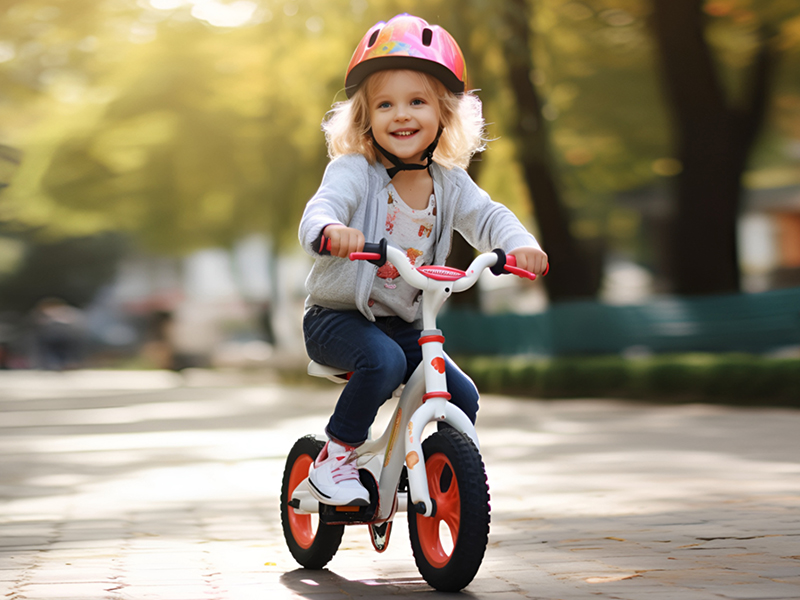
Balance bikes might look simple, but the benefits add up fast.
Because balance bikes focus entirely on balance, kids develop better coordination earlier. This can carry over into other activities like running, climbing, and even sports later on.
Kids learn at their own pace. There’s no pressure to pedal or keep up with others. That independence builds confidence, especially for kids who are cautious by nature.
From a parent’s perspective, balance bikes usually mean fewer tears and fewer forced practice sessions. Kids often choose to ride them on their own because they’re fun and easy to control.
Most balance bikes are much lighter than pedal bikes. That makes a big difference when a child gets tired and an adult has to carry the bike home.
Not all balance bikes are the same. There are a few main categories, each with its own advantages.
Wooden balance bikes look stylish and eco-friendly. They’re often a bit heavier and may have limited adjustability, but they’re durable and appealing for younger toddlers.
Metal frames, usually aluminum or steel, are the most common. They’re lightweight, adjustable, and built to handle more active riding. These are often the best long-term option.
Some balance bikes include a hand brake, usually on the rear wheel. This helps kids learn braking skills early, which can make the transition to a pedal bike even smoother.
Choosing the right balance bike matters more than picking the most expensive one.
Make sure the lowest seat height allows your child to sit with flat feet on the ground. This is non-negotiable for safety and confidence.
A lighter balance bike is easier for kids to control. A good rule is that the bike should weigh significantly less than the child.
Air-filled tires offer better grip and comfort, especially on sidewalks and uneven surfaces. Foam tires are maintenance-free but less forgiving.
Look for adjustable seats and handlebars. This extends the life of the bike and ensures a proper fit as the child grows.
Even though balance bikes are generally safer than pedal bikes, basic safety still matters.
A properly fitted helmet should always be worn, even for short rides. Kids who learn this habit early are more likely to keep it later.
Smooth sidewalks, driveways, and park paths are ideal for beginners. Avoid steep hills until the child has good control.
Shoes with good grip help kids push off and stop more easily. Avoid slippery soles.
Short answer: yes. Long answer: they work because they match how kids naturally learn.
Kids already know how to walk, run, and balance their bodies. A balance bike builds directly on those skills instead of introducing too many new ones at once.
From what I’ve seen growing up, kids who use a balance bike tend to:
Learn faster
Feel less afraid
Skip training wheels
Enjoy riding more
That enjoyment part is important. When learning feels fun, kids stick with it.
Balance bikes can range from budget-friendly options to premium models. Whether they’re worth it depends on how much value you place on the learning experience.
For many families, a balance bike replaces:
A push toy
A tricycle
A bike with training wheels
In that sense, it can actually simplify things.
A balance bike isn’t just a smaller version of a regular bike. It’s a learning tool designed around how kids actually develop balance and confidence. By removing pedals and distractions, it helps children focus on the most important skill first.
From a student’s perspective, watching kids master riding without fear or frustration is honestly impressive. It’s one of those cases where less really is more.
If you’re thinking about introducing a child to biking, a balance bike is a solid place to start.
Yes. Many children who use a balance bike transition directly to a pedal bike without ever needing training wheels.
When used with proper supervision and a helmet, balance bikes are generally very safe for toddlers due to their low speed and easy control.
It varies by child. Some kids start gliding within weeks, while others take several months. There’s no fixed timeline.
Some models include hand brakes, but many beginner balance bikes do not. Brakes are more common on models for older kids.
Choose a balance bike based on seat height range rather than wheel size. The child should be able to sit with both feet flat on the ground.


