
Views: 0 Author: Site Editor Publish Time: 2026-06-18 Origin: Site


The mountain bike market overflows with "Bicycle Shaped Objects" (BSOs). They mimic rugged off-road machines but routinely conceal manufacturer warnings prohibiting actual trail use. Taking a purely recreational bicycle onto technical singletrack invites disastrous equipment failure. It also risks severe personal injury. Identifying a capable rig requires looking past flashy paint jobs and aggressive decals. Buyers need an objective, component-based evaluation framework to verify capabilities before purchase. You will learn exactly how to distinguish a genuine trail machine from a cosmetic imitation. We break down essential components, modern frame standards, and geometry basics. You will understand how to evaluate suspension, drivetrains, and braking systems effectively. This guide ensures you select a safe, reliable MTB Bike suited perfectly for your local terrain. Stop guessing and start making informed decisions for your next off-road adventure.
A true trail-ready MTB bike requires hydraulic disc brakes, a dedicated off-road drivetrain (typically 1x), and functional suspension with actual damping.
"Future-proofing" your investment means checking for modern frame standards like tapered head tubes and thru-axles to ensure components can be upgraded later.
Matching the bike category (XC, Trail, Enduro) to your local terrain prevents over-spending on unnecessary suspension travel or under-equipping for technical descents.
The entry point for a verifiable, safe off-road hardtail typically starts above the big-box retail price tier.
We face a significant challenge differentiating recreational path bikes from purpose-built off-road machines. Department stores stock aisles full of aggressive-looking bicycles. They feature knobby tires and heavy coil springs. However, they lack the structural integrity required for rocks and roots. You must learn to spot the visual tricks manufacturers use to simulate trail readiness.
You should always apply the warning label test. Look closely at the frame tubing. Manufacturers routinely use ASTM condition classifications to protect themselves legally. A sticker indicating ASTM Condition 1 or 2 means the bike suits only smooth pavement or light gravel. Real trail bikes carry an ASTM Condition 3 or 4 rating. This rating guarantees the frame withstands drops, jumps, and harsh impacts. Ignoring these labels leads to folded frames and broken components.
Material choices reveal stark realities about off-road capability. Cheap lookalikes utilize high-tensile steel frames. This material adds massive unnecessary weight. It also yields easily under trail stress. Genuine entry-level trail bikes rely on butted aluminum frames. Butting removes excess material from low-stress areas inside the tubes. It maintains thickness at critical weld junctions. You get a lighter, vastly stronger chassis.
Feature | Bicycle Shaped Object (BSO) | True Trail-Ready Mountain Bike |
|---|---|---|
Intended Use Rating | ASTM Condition 1 or 2 (Path/Gravel) | ASTM Condition 3 or 4 (Jumps/Drops) |
Frame Material | High-tensile heavy steel | Butted aerospace-grade aluminum or carbon |
Suspension Type | Un-damped, heavy coil springs | Air sprung, adjustable rebound damping |
Brake Mounts | Weak stamped metal tabs | Reinforced post-mount or IS mounts |
Common Mistake: Never judge a bike by its derailleur brand alone. Big-box brands often bolt a recognizable rear derailleur onto a fragile high-tensile steel frame to create a false sense of quality.
Once a frame passes the baseline structural test, we must evaluate the moving parts. Trail riding demands specific component capabilities. You cannot compromise on brakes, gears, or suspension.
Hydraulic disc brakes stand as a non-negotiable requirement. You must avoid mechanical disc brakes and rim brakes for serious trail use. Mechanical systems stretch cables over time. Rim brakes lose almost all stopping power in wet mud. Hydraulics push sealed mineral oil or DOT fluid through hoses. They deliver massive, consistent stopping power in all weather conditions.
This translates directly to better rider outcomes. Hydraulics allow precise modulation. You control your speed rather than simply locking up the wheels. They permit single-finger operation. Using just your index finger saves your grip strength on long, sustained descents. You keep more fingers wrapped securely around the handlebar grips.
The 1x (single chainring) drivetrain revolutionized off-road riding. You need a setup featuring one ring up front and a wide-range cassette out back. It eliminates front derailleur drops entirely. It also simplifies shifting while you climb steep grades under heavy pedaling loads.
Your rear derailleur must feature a clutch mechanism. A clutch creates internal friction. It stops the derailleur cage from bouncing forward violently. This friction prevents chain slap against your frame. More importantly, it prevents derailment over rough rock gardens. A non-clutch drivetrain will drop the chain constantly on technical terrain.
We see countless beginner bikes ruined by terrible suspension forks. Avoid non-adjustable coil forks entirely. They act exactly like pogo sticks. They compress easily but rebound wildly after hitting a bump. You lose front-wheel traction instantly when the tire bounces off the dirt.
Seek forks offering adjustable rebound damping. Damping uses oil valves to control how fast the fork returns to its top position. An air spring provides the best experience overall. You can pump air in or let it out using a specialized shock pump. This tunes the fork stiffness exactly to your specific body weight and riding style.
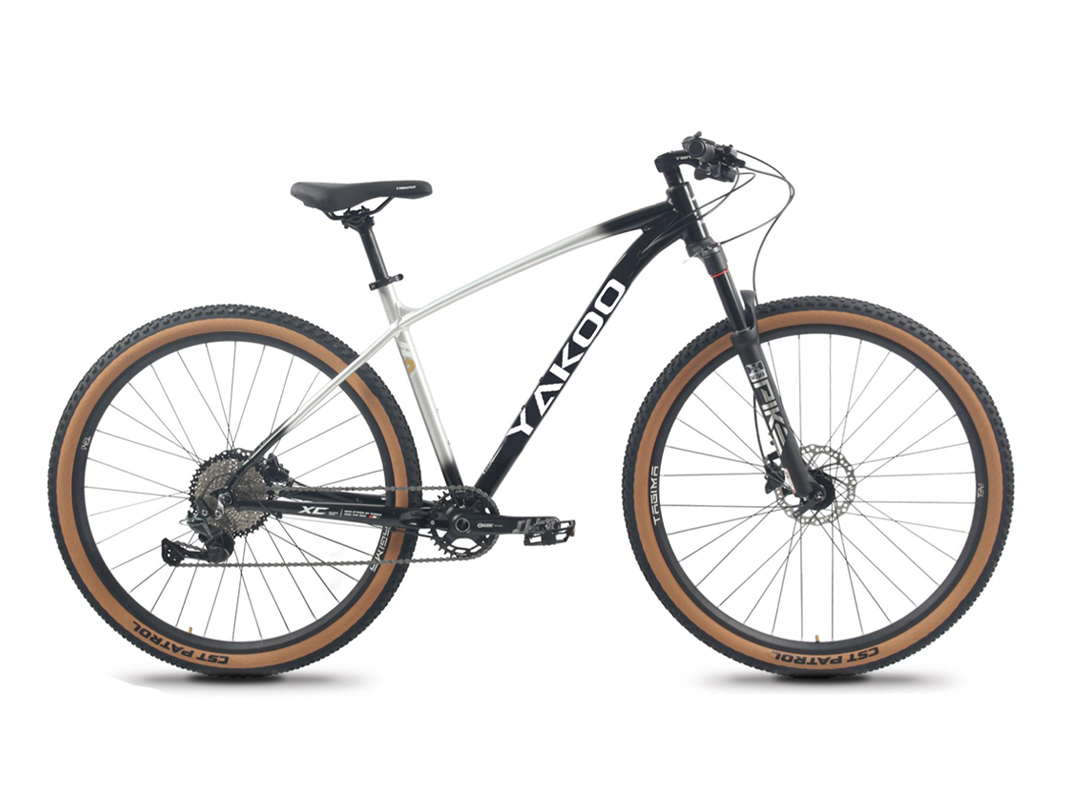
Frame standards dictate your future upgrade paths. Buying a cheaper bike often traps you into dead standards. You cannot replace broken parts easily later. Implementation risks soar when you purchase obsolete technology.
Tapered head tubes represent a critical modern standard. The steerer tube measures 1.5 inches at the bottom bearing. It tapers to 1-1/8 inches at the top bearing. This design adds massive stiffness for steering precision. Most modern aftermarket forks only use tapered steerers. Frames built for straight 1-1/8 inch tubes limit your upgrade options completely. You will struggle to find high-quality replacement forks.
Thru-axles replace flimsy quick-release (QR) skewers. Modern trail bikes utilize Boost spacing. This means a 110mm front axle and a 148mm rear axle. Thru-axles thread directly into the frame dropouts. They lock the wheel rigidly in place. They prevent lateral flex during hard cornering. Thru-axles also keep your brake rotors aligned perfectly. Quick-release skewers allow wheels to shift slightly under heavy braking forces, causing irritating brake rub.
Modern geometry assumptions matter just as much as hardware standards. Contemporary designs feature a slacker head-tube angle. The front wheel pushes further forward away from the rider. Reach measurements grow significantly longer. These changes provide immense stability when descending steep grades. They shift your center of gravity safely behind the front axle. You avoid pitching forward over the handlebars during sudden impacts.
Matching your terrain prevents awful riding experiences. Do not overspend on suspension travel you will never use. Do not under-equip for steep, technical descents. We categorize modern off-road machines by their intended terrain and suspension travel.
Cross-Country (XC) Bikes
XC machines typically feature 100-120mm of suspension travel. They utilize steeper geometry angles to keep steering razor-sharp. They excel on flat to rolling terrain. They offer maximum climbing efficiency. You should choose an XC model for long-distance pedaling and smooth dirt trails.
Trail Bikes (The Versatile Standard)
Trail models represent the sweet spot for the vast majority of riders. They feature 130-150mm of travel. They use balanced geometry that splits the difference between climbing and descending. They climb well enough for long days in the saddle. They remain robust enough for technical root sections, rock gardens, and moderate jumps.
Enduro/All-Mountain Bikes
Enduro rigs boast 160-180mm of travel. They feature aggressive, slack geometry designed to absorb massive hits. They are best suited for lift-accessed downhill parks, severe descents, and large drops. We strongly warn against buying this category for flat local trails. Their relaxed geometry and heavy tires make them feel sluggish and exhausting to pedal on flat ground.
Best Practice: Always evaluate the trails within a 30-minute drive of your house. Buy the category that matches your daily riding reality, not your annual vacation fantasy.
We must acknowledge the high cost of entry into this sport. Off-road longevity requires a solid initial investment. You must establish a minimum viable threshold for a safe, reliable setup. Cutting corners at the register leads directly to mechanical failures on the trail.
Consider the hardtail versus full-suspension trade-off carefully. At entry-level investment tiers, you face a distinct choice. Investing in a high-quality hardtail yields a significantly safer ride. It features better hydraulic brakes, a functional air fork, and a reliable 1x drivetrain. A compromised bottom-tier full-suspension bike sacrifices component quality entirely just to include a rear shock. The cheap rear suspension usually lacks proper damping anyway. It bounces unpredictably and adds unnecessary weight.
Hardtails teach better line choice. You learn to use your legs as natural suspension. You develop superior bike control skills before relying on mechanical aids. For strict budget constraints, a premium hardtail beats a bargain-bin full-suspension model every single time.
Account for hidden first-year costs immediately. The bicycle itself represents only part of the equation. You need purpose-built flat pedals with metal pins or a dedicated clipless system. You require a trail-rated helmet featuring rotational impact protection. You should strongly consider an immediate tubeless tire setup. Tubeless allows significantly lower tire pressures. Lower pressure means a wider tire footprint and better grip. It also eliminates the pinch flats so common on rocky trails.
Evaluating an off-road rig requires methodical analysis, not emotional guesswork. You must prioritize modern frame standards over superficial aesthetics. Look for tapered head tubes and thru-axles to ensure your investment scales with your skills. Demand hydraulic disc brakes for reliable stopping power. Insist on a 1x drivetrain featuring a clutch derailleur to keep your chain secure. Functional air suspension with adjustable rebound damping separates real trail machines from dangerous toys. Ignore flashy colors. Ignore excessive gear counts. Focus entirely on structural integrity and component functionality.
Your next step requires physical testing. Visit a local dealer or attend a brand demo day. Test ride your shortlisted categories. Do not just pedal around the parking lot sitting down. Stand up in the attack position. Feel how the modern geometry responds to your shifting body weight. Pay attention to the reach and stability. Armed with this component evaluation framework, you can now confidently select a highly capable machine ready for genuine singletrack adventures.
A: No. Department store bikes often carry warning labels explicitly stating they are not for off-road jumping or aggressive riding. They use un-damped coil springs that bounce uncontrollably. They rely on weak mechanical brakes that fail to stop you safely. Their high-tensile steel frames can bend or break under trail stress.
A: No. Hardtails teach better line choice and fundamental bike control. They force you to read the terrain actively. More importantly, hardtails offer significantly better component quality for entry-level budgets. You get superior brakes and a better front fork for the same investment.
A: Boost spacing is the modern axle width standard. It uses a 110mm front axle and a 148mm rear thru-axle. This wider stance increases wheel stiffness dramatically by improving spoke bracing angles. It guarantees your frame can accept future wheelset and suspension fork upgrades easily.
A: Highly recommended. Tubeless setups remove the inner tube entirely, replacing it with liquid sealant. This allows you to run lower tire pressures for massively improved grip. It also eliminates the risk of "pinch flats" caused by smashing a tube against a sharp rock.


